SEO for dentists: how to get more patients from Google
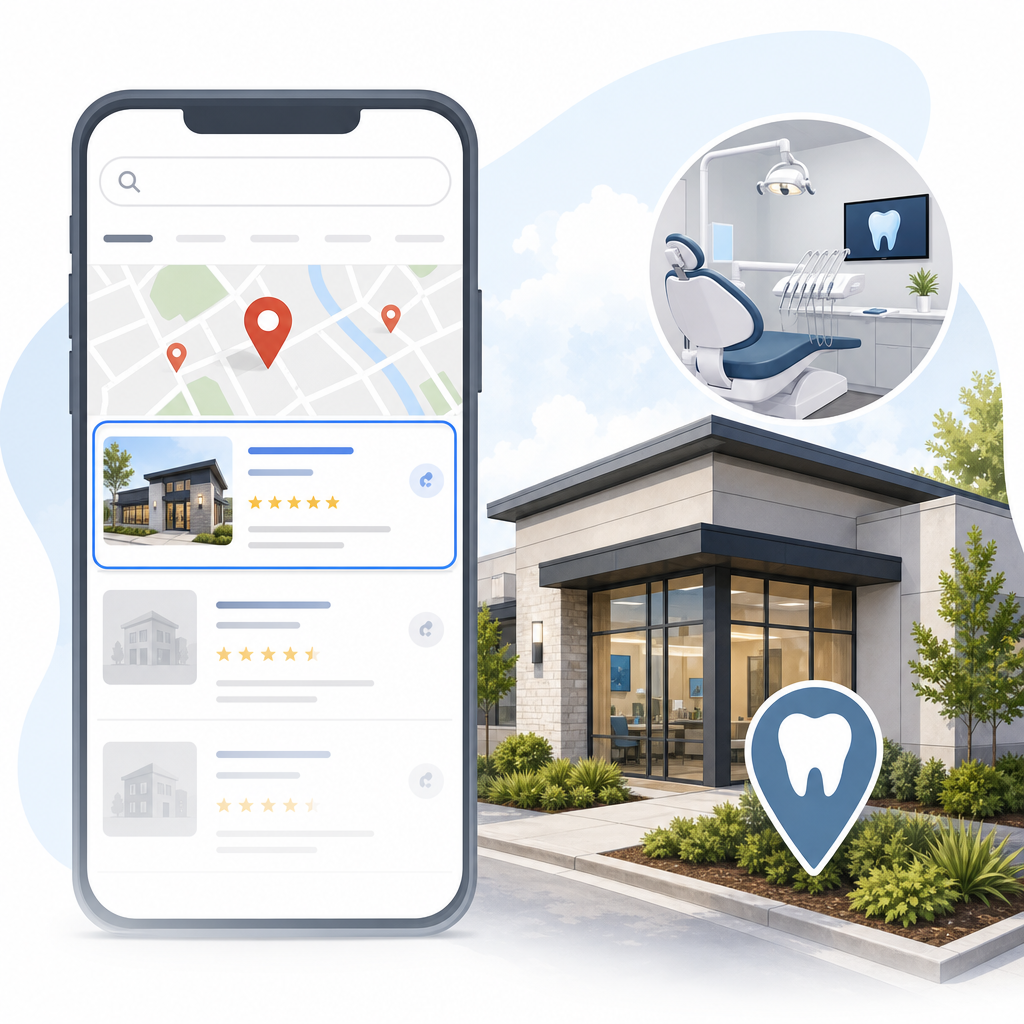
SEO for dentists is mostly local SEO. When someone searches "dentist near me" or "emergency dentist" in your town, you want your practice in Google's map pack and near the top of the results. Get that right, plus fast, trustworthy service pages and a steady flow of reviews, and Google sends you new patients every week.
Here's what actually moves the needle for a dental practice, in the order that matters, and how to keep it going without it eating your week.
Why dental SEO is a local game
People looking for a dentist don't scroll. They search on their phone, glance at the map, read a few reviews, and call. That behavior is why local search decides who fills the chair.
The demand is huge and it's local. Google search-volume data puts "dentist near me" at well over a million searches a month in the United States. Most of that intent is close to home and ready to act, Google's own research (Think with Google) has found that most people who run a local search on their phone visit a business within a day.
Trust is the other half. The 2023 BrightLocal Local Consumer Review Survey found that 87% of consumers used Google to evaluate a local business in the past year. For a dental practice, that means your Google presence, your listing, your reviews, your site, is the first impression you make on a new patient.
What "SEO for dentists" actually means
General SEO chases broad national keywords. Dental SEO is narrower and far more valuable: you're trying to be the obvious choice for people in your area who are ready to book.
That splits into two jobs:
- Local SEO, showing up in the map pack and "near me" results. This is where most dental patients come from.
- On-site SEO, clear pages for your money procedures (implants, Invisalign, crowns, emergency care) that answer patient questions and rank for searches like "dental implants in [your city]."
If you only have time for one, start with local. The map pack sits above the regular results, and for a dentist it's where the calls come from.
The dental SEO priorities that actually work
Do these in order. The first three win the most patients for the least effort.
1. Google Business Profile
Your Google Business Profile is your digital front door, and it feeds the map pack. Claim it, verify it, and fill in every field. The details that matter most for a practice:
- Primary category: "Dentist." Then add secondary categories you actually offer, "Cosmetic Dentist," "Pediatric Dentist," "Emergency Dental Service," "Orthodontist."
- Every service listed, from cleanings to implants, each with a short plain-English description.
- Name, address, and phone that match your website exactly.
- Real photos of your office, team, and reception. Patients want to see where they're going.
- Correct hours, including holidays, so no one shows up to a locked door.
2. Reviews
Reviews are the one signal you can't fake and can't buy. They also decide who calls after they find you.
Ask every happy patient for a Google review, a text with the link as they leave works far better than a card on the counter. Respond to every review, good or bad, in a calm and professional voice. A steady trickle of recent reviews beats one big burst a year.
3. Service pages for your money procedures
Build one clear page per high-value service: dental implants, Invisalign, teeth whitening, crowns, emergency care. Each page should explain the procedure in plain language, answer the questions patients actually ask, and use your city name naturally ("dental implants in [your city]").
These pages do two jobs at once. They rank for specific, high-intent searches, and they reassure a nervous patient before they book.
4. Local signals on your site
Make it obvious where you are and who you serve. Put your name, address, and phone number in the footer of every page. Embed a Google map on your contact page. If you have more than one location, give each its own page with unique content, not a copy of the others.
5. The technical basics
None of this matters if your site is slow or breaks on a phone. Most "dentist near me" searches happen on mobile, so cover the basics:
- Make sure the site loads fast and works cleanly on a phone.
- Use HTTPS (the padlock in the address bar) so browsers mark you as secure.
- Add dental or LocalBusiness schema, a small piece of code that tells Google your name, address, hours, and services.
If you're not sure where you stand, running an SEO audit will flag the technical problems quietly holding your site back.
6. Citations and directories
List your practice on the sites patients and Google trust: Healthgrades, Zocdoc, Yelp, and your state dental association. Keep the name, address, and phone identical everywhere. Inconsistent details confuse Google and cost you rankings.
A quick priority checklist
If you want the short version, this is the whole game for a dental practice:
| Task | Why it matters for a practice | How often |
|---|---|---|
| Google Business Profile | Feeds the map pack, where most "dentist near me" calls come from | Set up once, update monthly |
| Reviews | Top trust signal; decides who calls after they find you | Ongoing, every week |
| Service pages | Rank for high-value searches like "dental implants [city]" | One per major procedure |
| Local signals (address, map, location pages) | Tells Google exactly where you serve patients | Set up once, check quarterly |
| Technical basics (speed, mobile, HTTPS, schema) | A slow or broken site loses mobile patients | Fix once, then monitor |
| Citations (Healthgrades, Zocdoc, Yelp) | Consistent listings build local trust | Set up once, audit twice a year |
How long does dental SEO take?
Be wary of anyone promising the top spot in weeks. For most practices, local SEO shows real movement in three to six months, and the gains compound after that. Your Google Business Profile and reviews can move faster; ranking service pages for competitive terms takes longer.
The practices that win aren't the ones with the biggest budget. They're the ones who keep at it, a few small tasks every week instead of a rush once a year. A simple SEO checklist makes that routine easy to stick to.
Do it yourself, hire an agency, or automate it?
You have three ways to get dental SEO done, and each one fits a different practice.
| Option | Best for | The catch |
|---|---|---|
| Do it yourself | A practice with time and someone who enjoys the detail | The tasks are simple but constant, and they're the first thing to slip when the schedule is full |
| Hire a dental SEO agency | Practices that want it fully off their plate and have the budget | A monthly retainer that varies widely, and quality varies with it, watch for inflated ROI promises |
| Use SEO software | Practices that want the work done without agency prices | Most tools just hand you another to-do list instead of doing the work |
For a full breakdown of prices and trade-offs, see our guide to SEO services for small business.
How Tendrank helps a busy practice
Most dentists know SEO matters, but the work keeps slipping. There's always a patient in the chair. That's the gap Tendrank fills.
Tendrank is automated SEO software that does the work for you. It checks your site, finds the next useful task, a thin service page, a missing bit of schema, a local signal you're skipping, prepares the work for your approval, and reports what actually moved using Google Search Console. You approve; it does the rest. Not another dashboard to check.
The local groundwork dental SEO depends on is the same groundwork Tendrank handles for any local business. See local SEO for small business for how the map pack, citations, and reviews fit together.
Frequently asked questions
How much does SEO for dentists cost?
It depends on how you get it done. Doing it yourself costs mainly your time. A dental SEO agency is usually a monthly retainer that varies widely by market and scope. SEO software sits in between: you get the work done for a fixed monthly price. Our SEO services guide breaks the costs down.
How long before a dental practice sees results?
Most practices see real movement in three to six months, with gains building after that. Your Google Business Profile and reviews can improve faster; ranking service pages for competitive terms takes longer.
Do I need a new website?
Usually not. If your current site loads fast, works on a phone, and is secure (HTTPS), you can improve it in place. A quick audit will tell you whether the foundation is sound or needs work.
What's the difference between dental SEO and regular SEO?
Dental SEO is mostly local. Instead of chasing broad national keywords, you're trying to show up for people near your practice who are ready to book, "dentist near me," "emergency dentist [city]," "dental implants [city]."
Can I do dental SEO myself?
Yes. The core tasks, claiming your Google Business Profile, asking for reviews, writing service pages, don't require a specialist. The hard part isn't difficulty; it's doing a little every week when your day is full of patients.